
– Imari Paris Jeffries
At a time when so much public life feels like shouting, we remember a man who turned moral language into a tool, not a cudgel.
Rev. Jesse L. Jackson Sr., who passed away Tuesday at the age of 84, could lift a room, yes. But he also knew how to lift the whole neighborhood. He knew the difference between applause and alignment. He knew that to make big changes, you had to dream big.
In Boston, we recognize that kind of leadership. We have watched movements be born in Roxbury basements and South End living rooms, then go on to change the very landscape of our city and nation. Today, we place his name among the ancestors, the builders, the bridge-makers, the ones who refused to let despair be our final fate.
Rev. Jackson was born in 1941, came of age during the emerging civil rights movement, and was educated in the school of organizing. As a young organizer, he worked with Dr. Martin Luther King Jr. and the Southern Christian Leadership Conference (SCLC) and was central to Operation Breadbasket in Chicago, where the fight for civil rights met the fight for jobs and economic power.
His presidential campaigns in 1984 and 1988 mattered because they were evidence of politics as something Black communities could lead, not just react to. He expanded the electorate through registration, movement discipline and a message that connected race, class and peace without asking people to leave parts of themselves at the door. In 1988, he ran deep into the primaries and proved, by delegates and durability, that a Black-led coalition could contend for the highest office in the land.
Thirty years later, Jackson would watch as Barack Obama completed that journey all the way to the Oval Office as America’s first Black president.
But we must remember that Jackson’s activism and political career didn’t start the tradition of Black people shaking the halls of power. It was a continuation of it.
It began in the days of slavery and Reconstruction, when Black men newly freed from bondage entered legislatures across the South and briefly remade the meaning of American citizenship. It lived in the United States Senate with Hiram Revels and Blanche K. Bruce. It survived in local offices, in school boards, in the quiet endurance of Black governance under terror.
Then it was suppressed.
For nearly a century, Black political power was suppressed through violence, law and custom. When it reemerged in the 20th century, it did so unevenly through northern migration, ward politics, congressional seats carved out of segregated districts and the long work of organizing and litigation. By the time Harold Washington won the mayorship in Chicago and David Dinkins took New York, something deeper had shifted. From Mel King’s near-victory in Boston to the growing presence of Black mayors and other Black elected officialsacross the country, the 1980s marked a political turning point. They were evidence that the machinery of the state could be entered and steered.
Black History Month often invites us to look backward at struggle. But the tradition of Black hope has always been about forward motion. It concerns what happens when protest becomes policy, when marchers become elected officials, when those excluded from power exercise it.
Mel King symbolized that forward motion in Boston in 1983, a year before Jesse Jackson’s first presidential run. King assembled a citywide rainbow coalition before the phrase carried national weight. Black neighborhoods in Roxbury and Dorchester stood alongside white progressives, tenants, clergy, students and labor organizers. Housing justice and school equity were framed as citywide obligations. He came close enough to power to alter the city’s imagination.
Jackson scaled that imagination nationally. His National Rainbow Coalition (NRC) drew from Reconstruction’s unfinished promise and the civil rights movement’s moral force. It sought to assemble a multiracial working majority anchored by Black leadership and disciplined enough to contend for federal power. Electoral politics, to him, placed the movement’s energy under examination. The ballot required structure. Governing required stamina long after applause dissolved. Millions voted for him. Delegates were seated. Planks were rewritten. The Democratic Party had to reckon with constituencies it had long treated as peripheral.
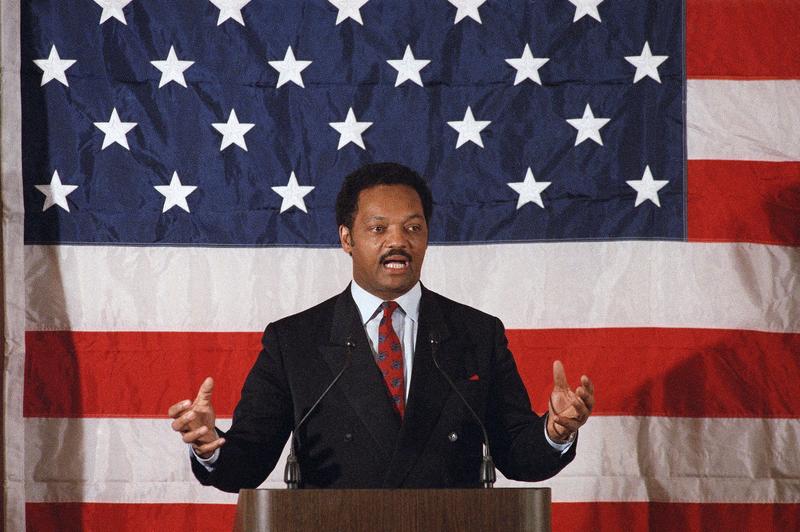
Jackson widened what “possible” meant. He proved that a Black presidential candidacy could be a serious campaign that competed across regions and issues. That changed the country’s political muscle memory, and it changed the expectations of the next generation.
And even though the presidential nomination did not come, the machine did. People trained. Networks strengthened. Demands clarified. That is how a campaign becomes a blueprint instead of a memory.
But if you want to understand Jackson, do not start with his proximity to power. Start with his proximity to people. The Rainbow Coalition, at its best, was not a branding exercise. It was a commitment to shared fate. Black and brown communities, working people, immigrants, students, faith folk and labor. Different histories, same hunger for dignity.
And now, in the current state of our country, that lesson is not abstract. We are living through deep polarization, distrust and a loud temptation to give up on one another. We are watching democratic norms get treated like suggestions, and we are witnessing too many neighbors being reduced to enemies. Jackson’s life reminds us that cynicism is not sophistication. It is surrender.
So we grieve, but we do not retire. We honor Jesse Jackson by practicing what he practiced: coalition as a daily discipline. By doing the unglamorous work of showing up, staying in relationship, and refusing to let the future be decided by those who profit from our division.
He told the nation to keep hope alive, and he lived as if hope had obligations. If this country feels uncertain right now, let his example steady our hands. Organize with love. Vote with memory. Lead with courage. And when the moment asks what we believe, answer with action.
It is our turn to answer the call.