

The Fine Print: The enduring battle against Jim Crow
What did you do when Jim Crow came knocking?
That’s the question we’re going to have to answer for our children and grandchildren. Not just one day in the far future. Right now.
What did you do when Jim Crow came knocking?
That’s the question we’re going to have to answer for our children and grandchildren. Not just one day in the far future. Right now.

As Frederick Hom Dow bends down to brush off the flower residue and dust from the 1965 Freedom Plaza plaque that bears his father’s name, he points to the first of three Chinese characters, 譚金源, that sit next to the English words, “Harry Hom Dow.”

“When someone shows you who they are, believe them the first time.”
Maya Angelou’s words have never been truer as we consider the motivation behind the Department of Justice’s attack on the Southern Poverty Law Center (SPLC).
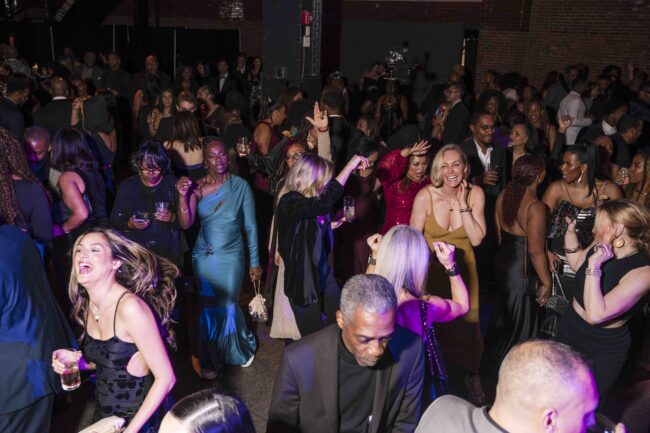
It matters more than ever at a time when nightclubs, lounges, and music venues—the gathering spaces that have long served as the connective tissue of Black social and civic life—are disappearing at an alarming rate. And it might not be a coincidence that democracy is dying along with the spaces where we learned to practice it.

I didn’t realize it at the time, but buying the Evil Empire album by Rage Against The Machine when I was a junior in high school fundamentally altered my brain chemistry.
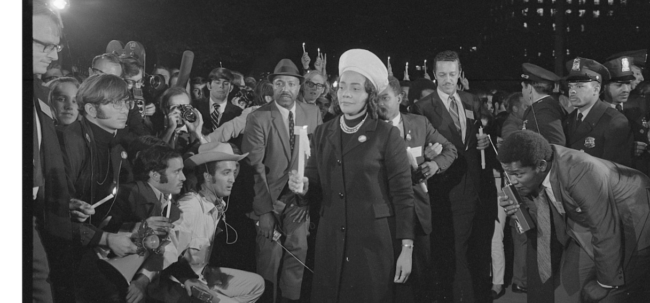
Coretta Scott King, who would’ve turned 99 years old this month, devoted her life to anti-war and anti-capitalist ideals. Those philosophies would make her an enemy of this current regime. And yet, we remember her as a hero who, along with her husband and countless others, brought this country closer to its truest ideals.

Last Saturday, America made history.
An estimated 8 million people took to the streets for No Kings rallies throughout the country as a protest against authoritarianism, war, and the erosion of our democratic systems.

You’re allowed to have things be new to you—like any student in class. You’re allowed to see this as new, and to learn and to grow. However, once you realize something is new to you, you have to acknowledge that it’s not new to everyone.
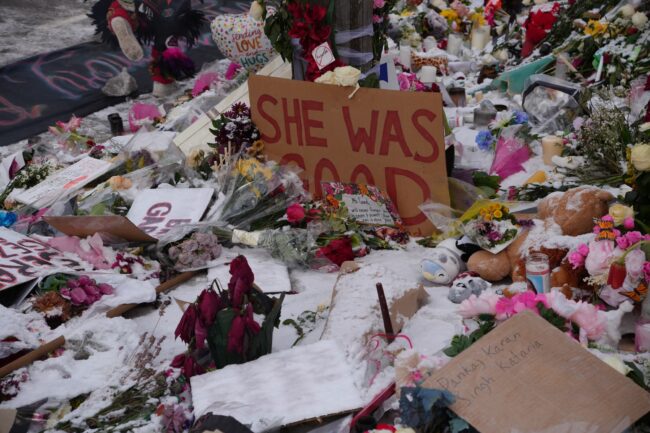
In a world where we ask technology to think for us—where time is money and everything has a price—we don’t just sacrifice knowledge. We also forfeit our capacity for empathy: our ability to understand and share the perspectives of others, and to think not just for our own good, but for the good of those around us.

Nikole Hannah-Jones asked a question heard around the country during her keynote speech at this year’s MLK Breakfast: “What will history say about you?”